EMI Absorbers / RF Absorbers
- Introduction
- EMI microwave absorbers function essentially as a "sponge" or a "black hole" for electromagnetic noise. When electronic components operate, they radiate stray electromagnetic waves (noise). If this noise interferes with adjacent components, it can trigger system crashes, signal intermittency, or data attenuation. While traditional metallic shielding merely reflects electromagnetic waves back into the system (acting like a mirror) and leaves the noise bouncing around inside the chassis, absorbers directly capture these high-frequency electromagnetic waves. Through internal physical mechanisms, they convert the wave energy into micro-thermal energy that safely dissipates, eliminating the source of interference at its root.
- Download
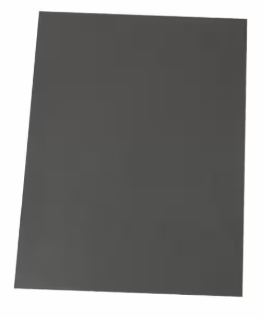
Structurally, an EMI absorber is an "organic-inorganic composite material," typically available in the form of a grayish-black flexible pad or thin film:
Carrier Backing (Organic Matrix): > Utilizes highly flexible polymer materials, such as Silicone, Polyurethane (PU), or Epoxy. This endows the material with its soft, bendable, and highly conformable characteristics.
Absorbing Fillers (Inorganic Core): > Micron- or nano-sized magnetic metal powders (such as Ferrite, Carbonyl Iron Powder) or carbon-based particles are uniformly dispersed throughout the rubber matrix. This is the core functional component responsible for actually "consuming" electromagnetic waves.
Physical Profiles: > Typically laminated with an acrylic double-coated tape (such as a PET double-coated carrier tape) on one side, allowing customers to easily peel and stick the material directly onto chips or flexible flat cables (FFC). Thickness options range from an ultra-thin 0.05 mm to a cushioned 3.0 mm to fit various space requirements.
Treats Both Root Causes & Symptoms (Absorption Over Reflection) Effectively minimizes "electromagnetic resonance" within enclosed metallic chassis, preventing secondary interference and stray reflections.
Ultra-Thin Profile & High Conformability The flexible material perfectly conforms to irregular chip surfaces or bent Flexible Printed Circuits (FPCs), with an ultra-thin profile that occupies minimal mechanical design space.
Excellent Processability (Easy Die-Cutting) Similar to film-backed tapes, absorber materials are highly compatible with precision die-cutting processes, allowing them to be converted into intricate geometric shapes to match various chip dimensions.
Multifunctional Hybrid Integration Advanced hybrid product options are available to deliver multi-purpose efficiency, such as "Thermal Conductive Absorbers" (simultaneously providing heat dissipation and noise suppression) or "Shielding-Absorber Composites" (featuring an outer reflective layer and an inner absorbing layer).
EMI absorber materials are extensively deployed in high-performance electronics, next-generation telecommunications, and high-reliability mission-critical systems:
3C & Consumer Electronics (The Largest Market) Utilized within smartphones, laptops, and wearable devices surrounding CPUs/GPUs; provides interference mitigation for camera lens modules and signal purification adjacent to Wi-Fi and 5G antennas.
Automotive Electronics & Autonomous Driving (The Fastest Growing Sector) Deployed in collision-avoidance radar systems (millimeter-wave radars), in-vehicle infotainment (IVI) systems, and precision autonomous driving sensors. To ensure driving safety, these components require absolute protection against signal corruption induced by engines or surrounding electronics.
Telecommunication Equipment & Network Infrastructure Applied to 5G base stations, high-speed routers, and for noise suppression inside optical transceivers housed within enterprise servers and network switches.
Medical Devices & Precision Instrumentation Integrated into magnetic resonance imaging (MRI) systems and high-end ultrasound equipment to prevent faint, critical physiological signals from being obscured by surrounding electromagnetic noise.